
News
Tuesday September 8 2026
Drought could yet impinge on first half of the Jumps season
All around the country, managers and clerks of National Hunt tracks are poring over long range weather forecasts, and praying to their Gods for rain from above. After the most severe drought since 1976, ground conditions are far removed from the standard required to release autumn and winter quality horses to play.
A very British conversation piece
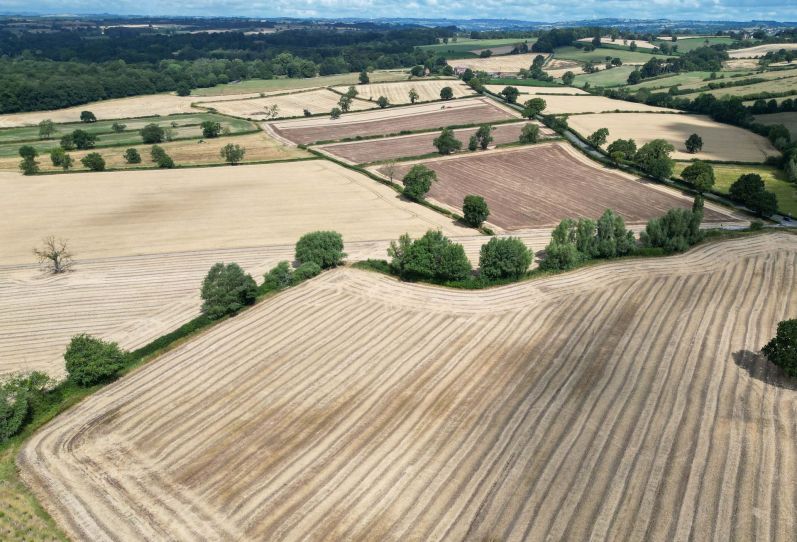
You know how British folk like to talk about the weather. Well this summer, they have good reason to do so. Whilst children's summer holidays have been spent in glorious baking sunshine, the lack of rainfall has resulted in parched landscapes, diminshed crop yields and farmers feeding stock winter forage in July.
The Met Office announced earlier this month that three quarters of the UK was in drought as restrictions on water use were applied to 27m residents across the country. Areas officially in drought include East Midlands, Lincolnshire and Northamptonshire, Kent and East Sussex, Solent and the South Downs, East Anglia, Hertfordshire and London, Thames Valley, Hampshire and the Isle of Wight, Devon and Cornwall, the West Midlands, and Wessex (covering Dorset, Somerset, Wiltshire and south Gloucestershire).

The implications for jump racing are quite stark. Albeit that irrigation for commercial premises which include racecourses remains permitted, even in areas of drought, retaining moisture in the ground has proved a challenge through no less than five heatwaves and across 10 weeks. Whilst the turf may be green and in good health on most courses, ground conditions are too quick for all but horses that love to hear their hooves rattle.
In the circumstances, staff at Summer jumps tracks have done sterling work in delivering safe fast ground all summer, as reflected in Stratford’s most recent fixture, which included a “Thank you to our hard-working groundstaff Handicap Chase”. But equally, the dry spell is compromising trainers and owners wishing to school - generally on grass – and finish their horses’ prep on the surface they’ll run on. It’s a fact that some horses will not let themselves down fully on artificial surfaces.
Our own Marcus Waters is upbeat. "There's still a long way to go," Waters said. "We started irrigating about two weeks earlier than normal. The prolonged warm and dry period has taken its toll a little bit but thankfully the track has fared fairly well. We had quite a wet beginning of June, so the water levels were well topped up into July and it was only in the last four to six weeks that we started to see it brown off a little bit more.” He told the Racing Post.
"We've got the irrigation going now and it's started to green up quite nicely. Hopefully we get more showers than we miss and if not, we'll be watering pretty much every day from now until racing to get it ready for
Welfare concerns are unfounded
Forty years ago, August was punctuated by summer fixtures at Newton Abbot and Exeter, with small fields on hard ground. But public scrutiny of the sport is more searching than in the pre-internet era; Hard ground is an automatic disqualifier of any fixture under the rules of racing, whilst horse welfare is right at the top of every venue’s criteria for protecting the sport’s reputation and social licence.
That social licence manifests itself often through betting sites, hosted by bookmakers with best odds guaranteed, which, whilst indispensable to the financial wellbeing of the sport in encouraging wagering, can also be a source of misinformed comment.
There is no question that the sport's governance is leading the education of the public on the welfare of the equine athletes in our care, as illustrated by this week's National Racehorse Week. Scrutiny of ground conditions plays a small but critical role in that oversight to sustain the sport over future generations.
In fact, sustainability for the sport at every level is at the heart of Racing Resilient: an environmental strategy for British racing, published 11 months ago by the BHA, which includes a water & resources impact assessment as a stage one precursor to an evidence-based action plan rolled out between 2027-30.
Wrong time, wrong place
So what may happen if the dry spell extends into the autumn?
The most likely outcome is a transfer of fixtures from those venues unable to recoup their ground to a satisfactory level to those that can. The summer tracks with sound watering systems, and racecourses in the north, and in Scotland, where drought has not been so acute, look in pole position, but even amongst these, appetite to take on more runners stands to compromise their own quality of presentation if taken to excess.
Without significant rainfall, races like Cheltenham’s cross country in November are odds-on to be deferred, but the loss of a single race need not turn into a crisis. Wholesale movement of the fixture list is highly disruptive, difficult practically, and impinges on existing programmes if locations are hundreds of miles apart. The West Country, as a hotbed of racing excellence, could be badly inconvenienced.
And what of the longer term if this is to become the norm? To put this in context, the winter of 2023 forced the abandonment of the highest ever number of mid-winter fixtures through waterlogging, so the overall volume of water isn’t necessarily the issue; rather the irregularity of rainfall.
The sport has been struggling to maintain field sizes for the whole of 2026, and this extends to both codes of the sport. A little over 43% of races this year have failed to reach each-way betting to three places. Amongst these, particular genres of race, like intermediate and novice chases are regular culprits. There is little point in a 3 runner novice chase, which teaches its participants little about the rough and tumble of a race. Surely it would be better to reduce the quantity of options to grow field size? Small fields do little for the levy and racecourses incur reduced media payments for races under 8 runners.
The number of Jumps fixtures has remained broadly static these past few years as flat racing has increased in volume, but this increase also impinges on field sizes, as animals that would otherwise have gone hurdling now remain in training on the winter all-weather programme.
Matching supply to demand is a thorny problem right at the top of the Inbox for new BHA Chair, Simon Cox.